Drone work can lift a Cape Town commercial shoot from competent to polished in a single frame, but the aerial department is never something to bolt on at the last minute. The aircraft, crew, permits, weather window, and location rules all have to line up before the camera leaves the ground. On high-value productions, the drone unit should be treated like a specialist location within the location, with its own logistics, safety plan, and approval path.
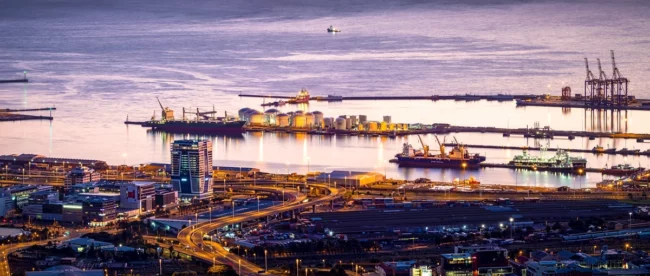
Cape Town gives productions a huge range of usable terrain, from coastline and urban streets to mountain backdrops and controlled studio lots. It also brings tight airspace, fast-changing wind, and multiple layers of compliance. If the aerial plan is built properly, the drone team can move quickly and quietly. If it is not, the entire schedule can unravel around one missing permit or one unsafe flight zone.
Start with the regulatory chain
Commercial drone use in South Africa sits under the South African Civil Aviation Authority, so the first question is always whether the operator is properly authorised. For paid work, the drone supplier needs an RPAS Operating Certificate, or ROC, issued to the company rather than the individual pilot. The pilot also needs a valid Remote Pilot Licence, or RPL, matched to the type of aircraft being flown. The drone itself must be registered with SACAA and carry its registration marking.
That is only the aviation side. Production still needs written permission from the landowner or site controller for take-off, landing, and operations. If the shoot uses a public space in Cape Town, such as a street, beach, promenade, or park, the City of Cape Town Film Office usually needs to be part of the process as well. Drone activity should be clearly included in the filming permission, not assumed as a side note.
Cape Town locations can also trigger other restrictions. Table Mountain National Park, Cape Point, and nearby reserves may require separate environmental approvals from bodies such as SANParks or conservation authorities. Areas near Cape Town International Airport, military sites, prisons, and other sensitive zones can fall into no-fly territory, and those boundaries need to be checked early, before any creative sign-off is presented to the client.
Build the right drone team
A commercial drone shoot is rarely handled by a pilot alone. The minimum useful setup usually includes the remote pilot, a visual observer who keeps watch on the aircraft and the surrounding space, and, on more demanding jobs, a camera operator or gimbal technician. A separate drone technician or assistant is also valuable because batteries, rigging, pre-flight checks, and general equipment handling consume time fast when the production day is moving.
That crew structure matters even more when the job calls for cinema-level camera work. Heavy-lift systems such as the DJI Inspire 3, Freefly Alta X, or DJI Matrice range can carry serious payloads, including cameras like the ARRI Alexa Mini, RED Komodo, Sony Venice, or high-end mirrorless bodies paired with cinema lenses. Those packages need stabilisation hardware such as a DJI Ronin 2 or Gremsy mount, plus monitoring for the pilot and for the director or client.
Cape Town has a deep enough film ecosystem to source this locally, but the supplier choice should be based on ROC status, experience, and set discipline rather than brand familiarity. Drone crews that already understand commercial production pacing, call sheets, and unit politics will save time from day one. A production coordinator or 1st AD should be assigned as the single point of contact so the drone team is not receiving conflicting instructions from every corner of the set.
Plan the flight before the shoot day
Drone integration works best when the flight path is treated like a location plan. The team should map the take-off area, landing point, emergency landing zones, and any movement corridors before the shoot starts. Google Earth or dedicated flight-planning software can help, but nothing replaces a real site survey. During that visit, the drone team should look for overhead cables, trees, poles, roofs, reflective surfaces, traffic, pedestrians, and anything else that could compromise a clean take.
Cape Town weather often becomes the deciding factor. The south-easterly known locally as the Cape Doctor can shut a drone down quickly, and commercial systems typically have wind limits around 10 to 12 m/s, or roughly 22 to 27 mph. Fog around Table Mountain, rain on the coast, and high heat all affect visibility, battery life, and electronics. Schedules should include backup timing, alternative shots, or a ground camera option if the wind window closes.
This is where logistics protects the creative brief. Aerial inserts can be planned for the most stable part of the day, often early morning, with a second slot held for later if conditions improve. Clients may prefer certainty over ambition, especially when they are flying in from abroad and expect the production to handle the local variables without drama.
Keep the set controlled
Safety on drone jobs is built through routine, not improvisation. Every flight should begin with a proper check of battery status, propellers, GPS lock, compass calibration, firmware, and payload security. Take-off and landing zones need to be marked and kept clear. Radios should be used for direct communication between the pilot, visual observer, 1st AD, and any crew member managing movement near the flight area.
The most basic rule still causes the most trouble: do not fly over people or public roads unless the operation has the higher level approvals and safety measures required for that exposure. Flying in dense urban areas adds another layer of caution because of signal interference, vehicle movement, and public activity. The drone unit should also have a written emergency process for signal loss, battery trouble, fly-away events, and controlled landings.
Risk assessments are part of the package, not an optional extra. A good ROC holder should produce a site-specific assessment for each job, and the production should review it before the aerial unit is scheduled into the day. That same discipline should extend to insurance. Third-party liability cover is mandatory for ROC holders, hull cover protects the aircraft and payload, and the production policy should explicitly recognise drone activity so coverage gaps do not appear after a claim.
Move the gear like production depends on it
It does. Drone logistics can stall a tight schedule if batteries are scattered, chargers are missing, or the aircraft arrives late and unprepared. The kit package needs hard cases, labelled spares, wind meters, landing pads, cones, communication gear, emergency supplies, and enough battery sets to keep the department moving while one set charges. Portable power or a generator becomes useful on larger exterior jobs, especially where mains access is limited.
Battery rotation and payload prep should happen off the main set flow where possible. That keeps the aerial crew from clogging wardrobe, camera, or art department space. It also reduces the chance of rushed handling when the unit is trying to catch a narrow weather window. On a well-run Cape Town shoot, the drone department is quiet, ready, and already cleared to work before the rest of the set notices the aircraft is airborne.
Seamless aerial capture comes from preparation, not luck. In Cape Town, that means ROC compliance, landowner approval, city permits where needed, a crew that knows its role, and a schedule that respects wind, airspace, and the realities of commercial production.